
Warehouse WHS: The Hazards That Injure the Most Workers and How to Address Them
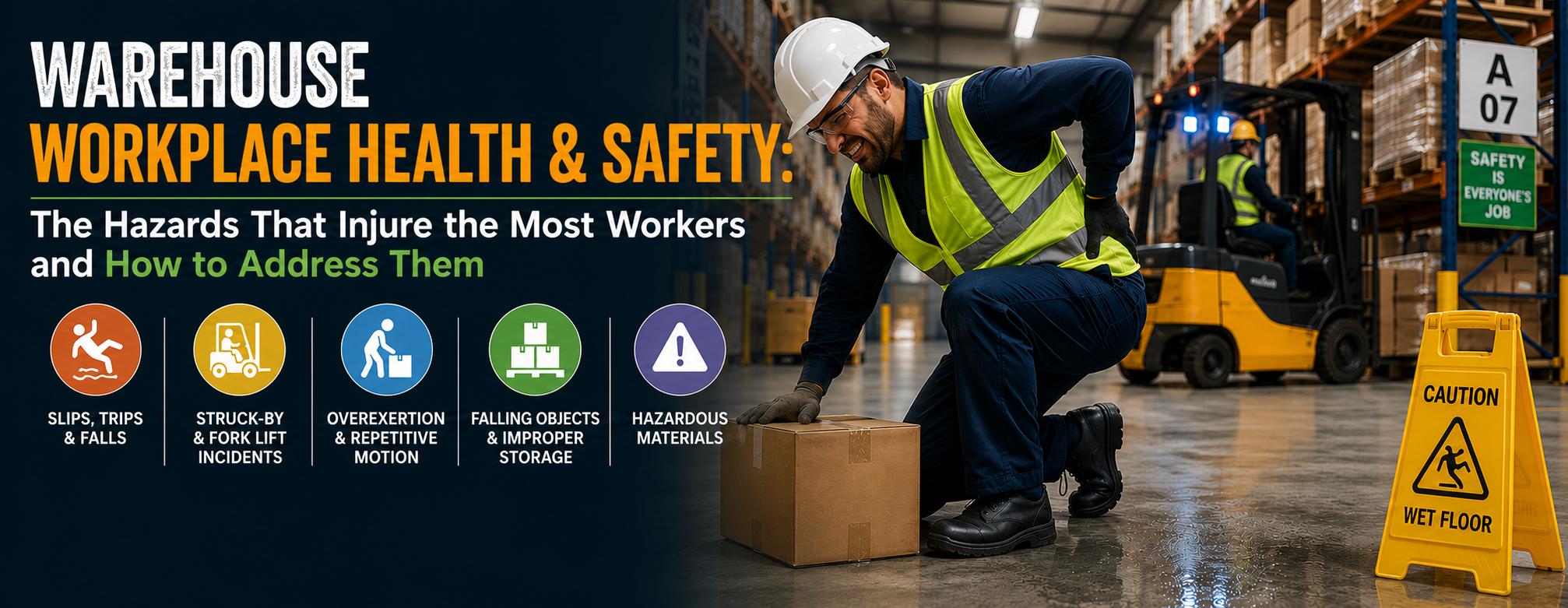
Warehousing and storage consistently appears in Safe Work Australia’s serious injury statistics. The reasons are structural, high-throughput operations, heavy loads, powered plant moving at speed through shared spaces, and a workforce that is often predominantly casual and high-turnover.
Managing WHS in this environment requires more than a toolbox talk and a forklift licence.
The Dominant Hazards
- Forklift and pedestrian interaction remains the most serious WHS hazard in warehouse environments, and despite decades of industry attention, it continues to produce serious and fatal injuries. Traffic management that physically separates forklifts and pedestrians is the only control that reliably addresses this risk. Painted lines are not adequate. Barriers, separate access routes, and interlocked doors are.
- Manual handling is the largest volume injury cause in warehousing. High-frequency lifting, awkward postures in racking pick operations, and the physical demands of receiving and dispatch create musculoskeletal injury risk that requires engineering controls (trolleys, lift assists, pallet movers) not just training.
- Racking integrity is an area that receives insufficient attention until a racking collapse occurs. Damaged racking from forklift impact, overloading, or inadequate installation is a serious structural hazard. Regular racking inspections by competent assessors, a defect reporting process that removes damaged racking from service, and a load management system that prevents overloading are the minimum controls.
- Fatigue is a hazard in warehousing’s shift-based, physically demanding environment that WHS legislation requires to be managed systematically, however usually it’s not.
Why Generic Audits Miss the Real Picture
WHS audits conducted from a generic manufacturing checklist miss the specific hazard profile of warehouse operations. An auditor who understands forklift traffic management, racking standards, and the manual handling demands of pick-and-pack operations sees a different picture from one working through a standard template.
AuditCo’s WHS audits for logistics and warehousing operations address the sector-specific hazard profile. Talk to us about a WHS assessment of your facility. Learn more about AuditCo’s WHS audit services →
Learn more about AuditCo’s WHS services
Related Posts
Subcontractor Compliance: Who’s Responsible When Things Go Wrong?
Pre-qualification tells you what a subcontractor looked like on paper before they started. It says…
ISO 9001 for Logistics Providers: What Quality Management Means When Your Product Is Service
ISO 9001 was written with manufacturing in mind — product conformance, production processes, inspection and…

Why Australian Manufacturers Are Rethinking Quality From the Floor Up
Every manufacturer has a quality system. Whether it is a comprehensive, certified ISO 9001 management…