
Food Safety Management Systems for Childcare Centres: Building Compliance Beyond HACCP
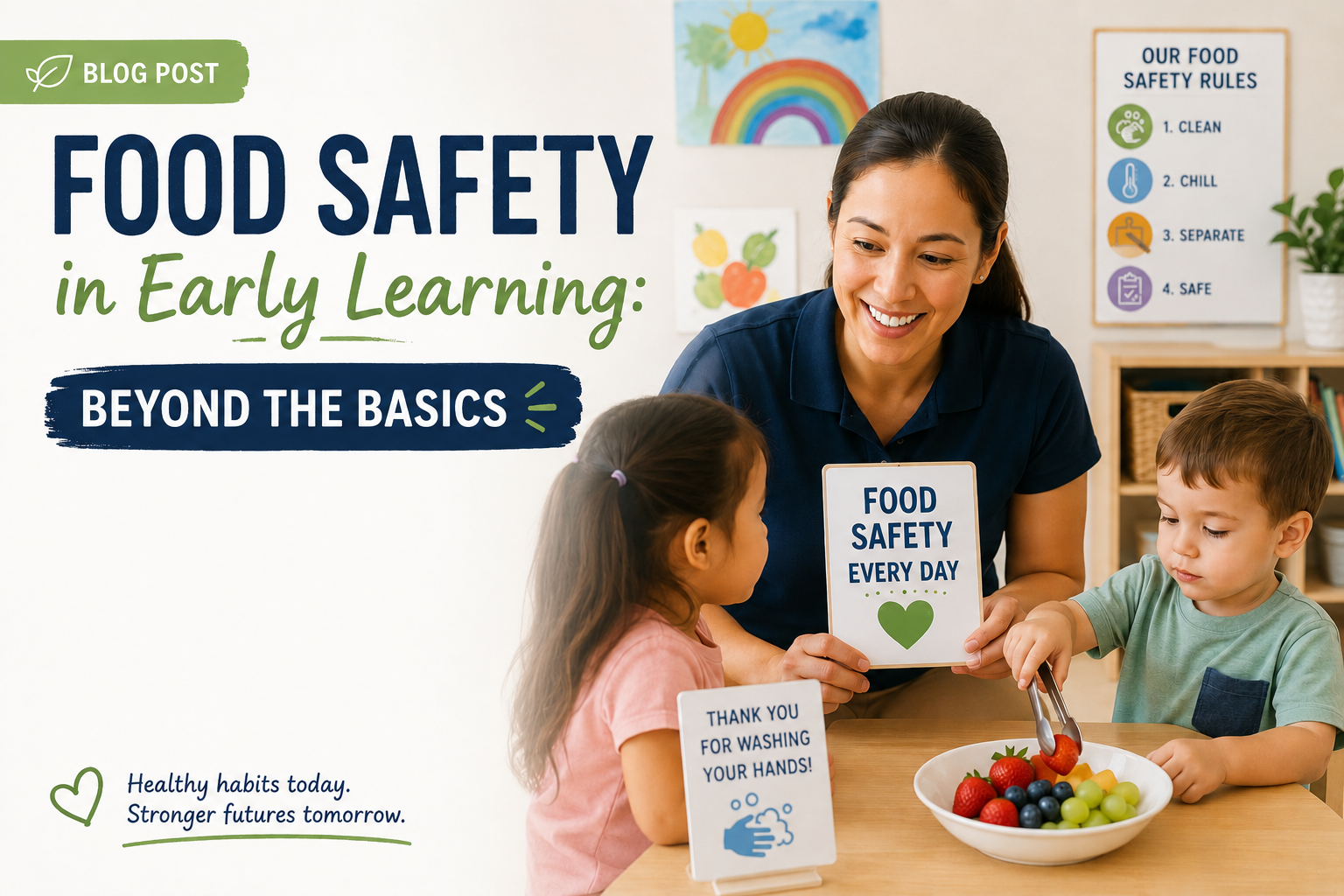
Every day, thousands of Australian early learning services prepare, handle, and serve meals to children who rely entirely on adults to keep them safe. For most centres, food service is simply part of the daily routine. Morning tea, lunch, afternoon tea, celebrations, cooking experiences, and special dietary requirements are all woven into the educational environment. Yet from a risk management perspective, food safety represents one of the most significant responsibilities a centre carries. Foodborne illness can spread quickly through a childcare environment. Allergen exposure can result in medical emergencies. Poor food handling practices can create compliance issues, reputational damage, and significant legal consequences. The most effective centres understand that food safety is not simply about passing inspections. It is about building systems that consistently deliver safe outcomes every day.
Why Food Safety Matters More in Early Learning
Children are particularly vulnerable to foodborne illness. Their immune systems are still developing, and they may be less able to recognise or communicate symptoms of illness. What may cause mild discomfort in a healthy adult can result in serious consequences for a young child. In addition, early learning centres often manage:
- Multiple meals each day
- Large numbers of dietary requirements
- Allergy management plans
- Shared eating environments
- Rotating kitchen and educator responsibilities
- Food-related educational activities
Each of these factors introduces additional risk. When viewed collectively, food safety becomes far more than a kitchen issue. It becomes an organisational responsibility.
The Difference Between Compliance and Effective Food Safety
Many centres have a Food Safety Program because regulations require one. Far fewer have a food safety management system that actively guides behaviour and decision-making throughout the organisation. A document sitting in a folder does not prevent contamination. A checklist that staff complete without understanding its purpose does not reduce risk. An effective food safety management system creates consistency. It ensures that safe food handling practices occur regardless of who is working, how busy the day becomes, or what unexpected challenges arise. The goal is not simply to demonstrate compliance during an inspection. The goal is to make safe food practices routine.
Understanding HACCP in a Childcare Environment
Hazard Analysis and Critical Control Point (HACCP) principles form the foundation of modern food safety management. The HACCP approach focuses on identifying hazards before they become incidents. In a childcare setting, these hazards may include:
Biological Hazards
- Bacterial contamination
- Viral contamination
- Mould growth
- Cross-contamination between raw and ready-to-eat foods
Chemical Hazards
- Cleaning chemical contamination
- Incorrect food additives
- Pest control chemicals
Physical Hazards
- Foreign objects in food
- Damaged utensils
- Packaging fragments
- Equipment failures
By identifying where these hazards may occur, centres can implement controls that reduce risk before harm occurs.
Allergen Management: One of the Highest-Risk Areas
Few areas of food safety carry greater potential consequences than allergen management. Food allergies continue to increase across Australia, and many early learning services care for children with severe allergy risks. Effective allergen management requires much more than displaying allergy lists.
Centres should have documented processes covering:
- Identification of allergens
- Menu planning
- Ingredient verification
- Food preparation procedures
- Cross-contact prevention
- Food labelling
- Staff training
- Emergency response procedures
One of the most common issues identified during food safety audits is the assumption that staff “know” which children have allergies. Robust systems do not rely on memory. They rely on clearly documented and consistently applied controls.
Temperature Control: The Most Common Compliance Failure
Temperature monitoring remains one of the simplest and most effective food safety controls available. Yet it is also one of the most common areas where centres experience non-conformances. Common issues include:
- Missing temperature records
- Incomplete monitoring logs
- Uncalibrated thermometers
- Improper cooling procedures
- Inconsistent refrigeration checks
Food can move into the temperature danger zone surprisingly quickly. Without consistent monitoring and corrective actions, the risk of bacterial growth increases significantly. The purpose of temperature recording is not to generate paperwork. It is to provide evidence that food has been stored and handled safely.
Cleaning and Sanitation Systems
Clean facilities are important. Verified cleaning systems are even more important. Many organisations focus heavily on visible cleanliness while overlooking whether cleaning procedures are actually effective. An effective sanitation program should include:
- Defined cleaning responsibilities
- Cleaning schedules
- Approved chemicals
- Verification procedures
- Equipment cleaning requirements
- Deep-clean schedules
- Record keeping
Cleaning should be treated as a controlled process rather than a reactive activity.
Staff Training: The Human Factor
The strongest food safety procedures can fail if staff do not understand them. Training should not be viewed as a once-a-year compliance exercise. Instead, food safety competence should be built through:
- Induction training
- Refresher training
- Toolbox talks
- Practical demonstrations
- Observation and coaching
- Incident reviews
Training records should demonstrate not only attendance but also competence. When incidents occur, investigations frequently reveal that procedures existed but were not fully understood or consistently applied.
Food Safety Documentation That Adds Value
Documentation should support operations rather than create unnecessary administrative burden. Good documentation provides:
- Evidence of compliance
- Consistency between staff
- Traceability
- Accountability
- Continuous improvement opportunities
Examples include:
- Temperature monitoring records
- Cleaning schedules
- Supplier records
- Allergy management documentation
- Training records
- Corrective action reports
- Internal audit findings
The best documentation systems are simple, practical, and integrated into daily workflows.
Internal Audits: Finding Problems Before Regulators Do
One of the most effective risk management tools available to early learning providers is the internal audit. Internal audits help centres answer important questions:
- Are procedures being followed?
- Are records complete?
- Are controls effective?
- Have new risks emerged?
- Are staff confident in their responsibilities?
Audits provide a structured opportunity to identify weaknesses before they result in incidents or regulatory findings. They also demonstrate a commitment to continuous improvement.
What Food Safety Auditors Commonly Find
Across childcare and early learning environments, recurring issues often include:
- Inconsistent allergen controls
- Poor temperature monitoring practices
- Incomplete documentation
- Outdated procedures
- Staff training gaps
- Supplier verification weaknesses
- Cleaning verification deficiencies
Importantly, these findings rarely result from negligence. More often, they reflect the reality of busy centres where competing priorities can gradually erode systems over time. Regular independent reviews help identify these issues before they become significant risks.
Moving Towards a Food Safety Culture
The most successful centres move beyond compliance and build a genuine food safety culture. In these organisations:
- Staff understand why controls exist.
- Food safety is discussed openly.
- Near misses are reported and reviewed.
- Continuous improvement is encouraged.
- Leadership actively supports safe practices.
Food safety becomes part of everyday decision-making rather than something considered only during inspections.
That shift from compliance to culture is where the greatest risk reduction occurs.
Protecting Children Through Better Systems
Food safety is one of the most important responsibilities entrusted to an early learning service. Strong systems protect children, support staff, demonstrate due diligence, and build confidence among families. While regulations establish minimum requirements, leading centres aim higher. They build food safety management systems that are practical, effective, and embedded in daily operations.
By focusing on prevention, continuous improvement, and independent verification, early learning providers can create safer environments for every child they serve.
Related Posts

HACCP in Practice: The Difference Between a Plan That Works and One That Sits in a Binder
Having a HACCP plan and having a working HACCP plan are two different things. This…