
Where compliance visibility meets operational confidence.
Logistics and supply chain operations underpin every sector of the Australian economy, and they carry compliance obligations that are more extensive than most operators fully appreciate. The Work Health and Safety requirements for warehousing, transport, and materials handling are substantial and actively enforced. The ISO 9001 quality management expectations of major customers and third party logistics clients are rising. Product certification and chain of custody requirements for regulated goods add another compliance layer. And the supplier audit obligations of manufacturers, retailers, and government agencies that depend on supply chain partners to maintain their own compliance positions are creating upstream expectations that reach into every warehouse, distribution centre, and logistics operation in the country.
AuditCo provides independent audit, inspection, and certification services for Australian logistics and supply chain businesses, from third party logistics providers and freight forwarders through to warehousing operations, cold chain distributors, and product importers. Our auditors bring practical operations experience to every engagement: the WHS hazard profile of warehouse and transport environments, the quality management expectations of major 3PL clients, and the product certification and inspection requirements for regulated goods categories. With national coverage across every major logistics hub in Australia, we deliver the independent assurance that logistics businesses need to satisfy their customers, maintain their certifications, and demonstrate compliance to regulators who scrutinise the sector closely.
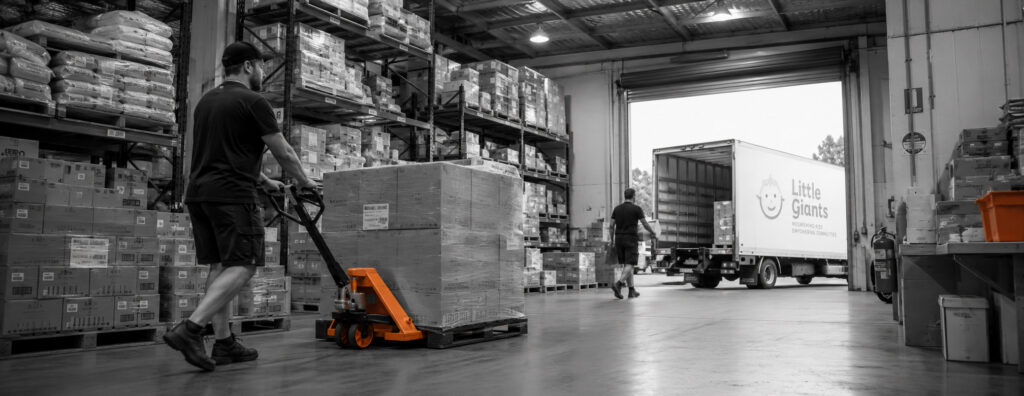
Compliance in logistics runs in both directions: inward from your clients, and outward to your own supply chain.
Logistics businesses sit at the intersection of multiple compliance relationships simultaneously. Their major clients, manufacturers, retailers, healthcare operators and government agencies all impose quality management and WHS requirements on their 3PL providers. Those same logistics businesses impose requirements on their own sub-contractors, transport operators, and warehousing partners. Managing compliance in both directions, satisfying incoming client requirements while maintaining oversight of outgoing supply chain relationships is the distinctive challenge of logistics and supply chain compliance.
AuditCo’s logistics sector audit services are designed to support both directions. Our ISO 9001 and WHS audit programs help logistics businesses meet the requirements their clients are imposing. Our supplier audit services help them maintain visibility into the compliance posture of the supply chain relationships they depend on. The result is a compliance program that holds in both directions, satisfying the clients on whose business the logistics operation depends, and protecting the business from supply chain compliance failures that would otherwise arrive without warning.
Capability Snapshot
- WHS Audits: Warehousing, distribution centres, transport, cold chain operations
- ISO 9001: Quality management system certification
- ISO 45001: Safety management system certification
- ISO 14001: Environmental management system certification
- Supplier and sub-contractor compliance audits (2nd party)
- Chain of custody verification
- Internal audits and management system compliance reviews
Serving: Third party logistics (3PL) providers, freight forwarders and customs brokers, warehousing and distribution operators, cold chain logistics, transport companies, product importers, retail supply chain operators, pharmaceutical and healthcare distributors
Every aspect of your compliance, covered.

WHS Audits: Warehousing & Transport
Logistics environments carry specific WHS risks: forklift and pedestrian interaction, racking integrity, manual handling in high-throughput operations, driver fatigue, and loading dock hazards. AuditCo’s WHS audits for logistics and warehousing address the hazard profile specific to your operation, with the practical experience to identify what a generic manufacturing checklist misses.
ISO 9001: Quality Management
ISO 9001 quality management certification is increasingly required by major 3PL clients and supply chain operators as a condition of contract. Our ISO 9001 auditors work with logistics businesses to implement and certify quality management systems that reflect the specific quality obligations of logistics operations, service quality, damage rates, inventory accuracy, and on-time performance and satisfy the expectations of demanding clients.
Supplier & Vendor Audits (2nd Party)
Supply chain integrity starts with supplier integrity. AuditCo’s 2nd party supplier audit services give logistics and supply chain businesses independent verification of the compliance posture of their key vendors, suppliers, and sub-contracted service providers, before a compliance failure in the supply chain becomes your compliance failure.
Product Quality Inspections
Independent quality inspection services for goods at point of manufacture, consolidation, port of entry, or distribution centre, verifying that product meets specification before it enters your supply chain. Particularly relevant for importers, retailers sourcing from offshore manufacturers, and logistics operators handling regulated or high-value product categories.
Internal Audits & Compliance Reviews
Independent internal audit services for logistics businesses managing multiple compliance frameworks simultaneously. Our auditors provide objective assessment of quality and safety management system effectiveness, identifying gaps before a client audit, regulatory inspection, or incident does.
Insights for logistics, supply chain, and operations leaders
Practical thinking on WHS, quality management, supplier compliance, and the regulatory environment shaping Australian logistics and supply chain.
Warehouse WHS: The Hazards That Injure the Most Workers and How to Address Them
Warehousing has one of the highest serious injury rates in Australian industry and the hazards that cause most of the damage are predictable. This article covers the dominant WHS hazards in warehouse environments, from forklift-pedestrian interaction and racking integrity to manual handling and fatigue, and explains why generic audit checklists miss the sector-specific risk picture.
Find out more…
ISO 9001 for Logistics Providers: What Quality Management Means When Your Product Is Service
ISO 9001 was designed in a manufacturing context, but logistics businesses deliver service quality, and the standard’s requirements need deliberate translation into what quality management means for 3PLs and freight operators. This article explains what quality metrics matter in logistics, what ISO 9001 genuinely requires from a service-oriented business, and why major clients are making certification a baseline expectation.
Find out more…
Subcontractor Compliance in Logistics: The Hidden Risk in Your Delivery Network
Logistics businesses sub-contract extensively and carry WHS and quality compliance exposure when those subcontractors fail. This article examines the head contractor liability parallel in logistics sub-contracting, what effective subcontractor compliance management requires beyond licence and insurance verification, and how major clients are making sub-contractor oversight a supply chain expectation.
(Blog coming soon…)
Product Inspection at Origin: Why Checking Goods Before They Ship Saves More Than It Costs
A non-conformance found at the supplier’s factory before shipment is correctable at the supplier’s cost. The same non-conformance discovered at an Australian dock or in a retailer’s distribution centre is a logistics, financial, and client relationship problem. This article explains what pre-shipment product inspections cover, how AQL sampling provides a statistical basis for accept-or-reject decisions, and why origin inspection saves more than it costs.
(Blog coming soon…)
Chain of Responsibility in Australian Logistics: What Every Party in the Supply Chain Is Required to Manage
Australia’s Chain of Responsibility legislation extends heavy vehicle safety obligations to every party that influences how freight moves, consignors, consignees, schedulers, and loading managers as well as transport operators. This article explains what CoR requires in practice, what documented systems regulators expect, and why businesses that don’t own a single truck still carry CoR compliance obligations.
(Blog coming soon…)
Dangerous Goods Compliance in Logistics: What WHS and Transport Regulations Require
Dangerous goods handling in logistics creates specific WHS and transport regulatory obligations, and the consequences of dangerous goods incidents in warehouse and transport environments are severe. This article maps the regulatory framework governing dangerous goods in Australian logistics, the obligations most commonly misunderstood, and the compliance failures that most frequently appear in WHS audits of logistics operations.
(Blog coming soon…)
3PL Client Audit Requirements: What Major Clients Are Now Expecting From Logistics Providers
Major 3PL clients in retail, FMCG, healthcare, and government are raising their compliance requirements for logistics providers, covering ISO 9001 certification, WHS management, subcontractor oversight, business continuity, and increasingly, environmental and data security management. This article maps what leading clients are now asking for and how frequently they are conducting supply chain audits of their logistics partners.
(Blog coming soon…)
The Logistics Compliance Checklist: A Self-Assessment for Warehouse and Supply Chain Operations
Logistics compliance spans WHS, quality management, dangerous goods, cold chain, subcontractor management, and client-specific requirements simultaneously. This practical self-assessment checklist covers the compliance dimensions most frequently found to be inadequate in warehouse and logistics audits, structured for operations managers who need a fast and honest review.
(Blog coming soon…)
Supply Chain Visibility: Why Australian Businesses Are Investing in Upstream Audit Programs
Supply chain visibility has moved from strategic preference to compliance requirement, driven by modern slavery obligations, ESG reporting, quality management standards, and the commercial risk of upstream failures that arrive without warning. This article explains what upstream audit programs look like in practice, how supply chain compliance cascades from large reporting entities down to private businesses, and why logistics operators need audit visibility in both directions.
(Blog coming soon…)
Racking Safety in Warehouses: The Structural Hazard Most Operators Underestimate
Warehouse racking holds tonnes of product above workers daily, and racking failures cause serious injuries and fatalities. This article explains what AS 4084 and WHS regulations require for racking safety, what the damage classification system means in practice, and why independent racking inspections by qualified assessors are the only way to maintain documented compliance.
(Blog coming soon…)
ISO 14001 in Logistics: Why Environmental Management Certification Is Moving Up the Supply Chain
Environmental management certification is moving from large corporates to their logistics providers, driven by Scope 3 emissions reporting obligations that flow supply chain sustainability requirements downstream. This article explains what ISO 14001 requires in a logistics and warehousing context, what the certification process involves, and why the commercial pressure for certification is following the same trajectory ISO 9001 took a decade ago.
(Blog coming soon…)
Logistics Compliance Insights: The Themes That Matter
In covering logistics compliance, the sector’s defining challenge remains managing compliance pressure from clients above and supply chain risks from sub-contractors below, simultaneously and with limited resources. This article names the compliance themes most consistent across the year and previews the topics ahead: ESG in logistics, AI in supply chain, cold chain compliance, and modern slavery obligations.
(Blog coming soon…)
Enquire Now
Complete the form below and we will be in touch in no time:
Audit Days Completed
Auditors
Locations
Why Clients Choose Us

Best Geographic Coverage
With auditors strategically located around Australia, we can cover any requirement.

Accredited & Qualified
Our Exemplar auditor quals, industry memberships and associations cannot be beaten!

Over 10,000 Audit Days Delivered
We are one of the most experienced audit teams in the industry - 100+ yrs of combined experience.