
The Real Cost of Poor Quality in Manufacturing and How to Measure It
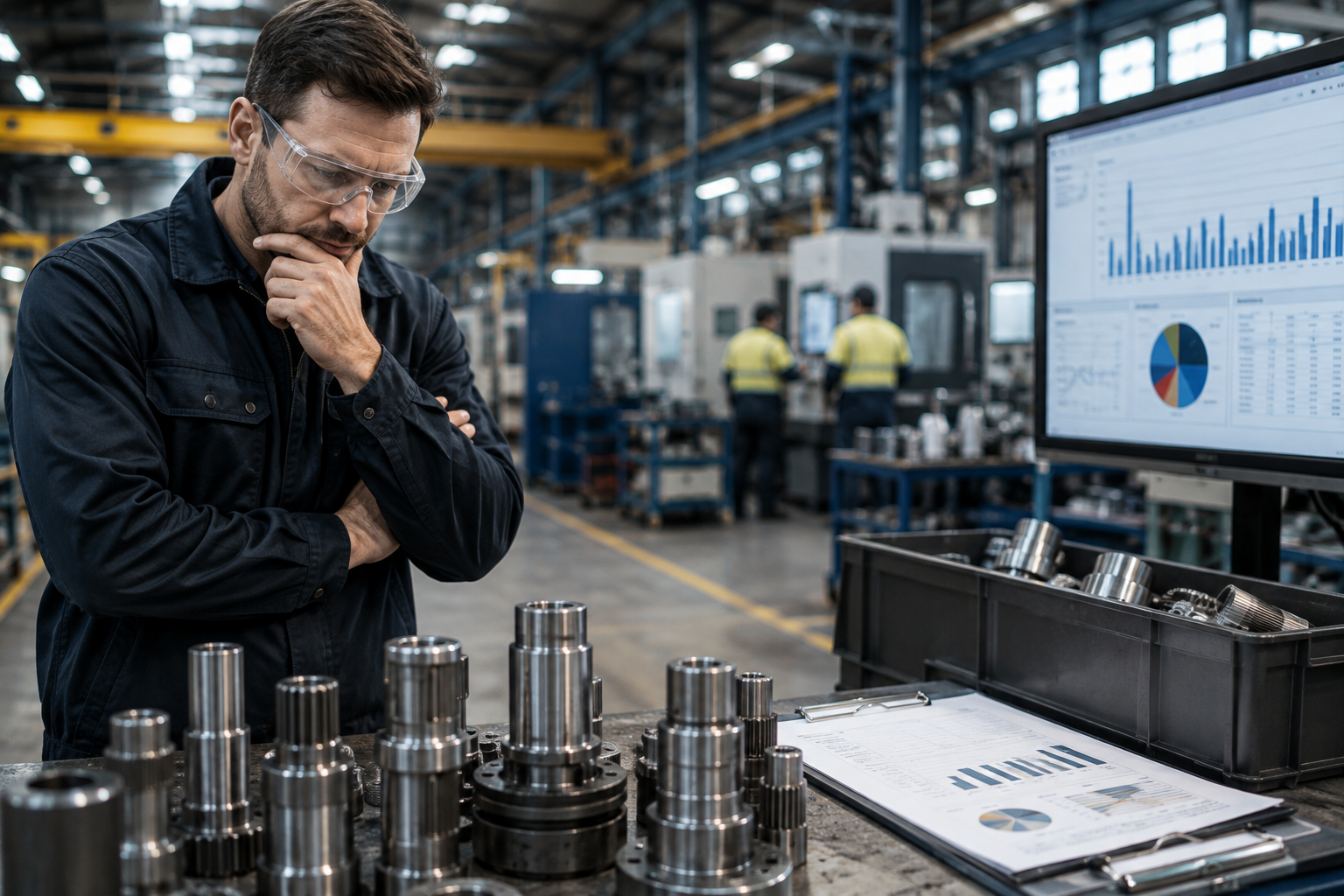
Ask the average manufacturing operations team what poor quality costs their business, and the answer will involve the rework line, the scrap bin, and the occasional customer complaint. Ask a quality professional, and they will add warranty claims, inspection overhead, and expediting costs when rejected material delays production. Ask a CFO who has run the full analysis, and the number will be substantially larger than anyone expected (typically between 5% and 25% of total revenue) depending on the industry and the maturity of the quality management system.
The reason the number is almost always larger than expected is that most manufacturers measure the visible cost of poor quality, the direct cost of rework, scrap, and returns, and miss the invisible cost. The invisible cost is where the real money is.
The Four Categories of Quality Cost
The quality profession has long organised the cost of quality into four categories, and understanding all four is the starting point for any meaningful measurement:
- Prevention costs are what you spend to prevent defects from occurring, quality planning, process design, supplier qualification, training, and preventive maintenance. Most manufacturers underinvest here relative to what they spend in the other three categories.
- Appraisal costs are what you spend to detect defects, incoming inspection, in-process inspection, final inspection, testing, and calibration. These are usually the most visible quality costs, and in many manufacturing environments, inspection is so embedded in the production process that its true cost has never been separately calculated.
- Internal failure costs are what you spend on defects found before the product reaches the customer, rework, scrap, reinspection, production delays, and the overhead of managing nonconforming material. This category is usually underestimated because the cost of the production disruption associated with a quality failure is rarely attributed to quality.
- External failure costs are what you spend on defects found by the customer, warranty claims, field repairs, product returns, customer complaints, and the hardest to quantify but most significant: the cost of lost customers and damaged reputation.
Why Measuring Matters
Manufacturers who do not measure the cost of poor quality cannot prioritise their quality improvement investment. They spend money on inspection, which is an appraisal cost that detects failures but does not prevent them, and underinvest in prevention. The result is a quality program that is expensive and not improving.
Measuring cost of poor quality, even at a rough-cut level, consistently shifts the conversation in manufacturing organisations from “quality is a cost” to “poor quality is a much bigger cost.” This shift is the precondition for genuine quality improvement investment.
AuditCo’s manufacturing audits include assessment of quality cost measurement and reporting as part of a broader quality management system review. Talk to us about what your quality program is actually costing you, and what a genuinely effective system could save.
Learn more about AuditCo’s ISO 9001 services: www.auditco.com.au
Related Posts

Subcontractor Compliance: Who’s Responsible When Things Go Wrong?
Pre-qualification tells you what a subcontractor looked like on paper before they started. It says…

HACCP in Practice: The Difference Between a Plan That Works and One That Sits in a Binder
Having a HACCP plan and having a working HACCP plan are two different things. This…

WH&S Risk Management in Early Learning Centres: Governance, Compliance and the Duty of Care Imperative
Early learning centres carry serious WH&S risk — from manual handling and musculoskeletal injury to…